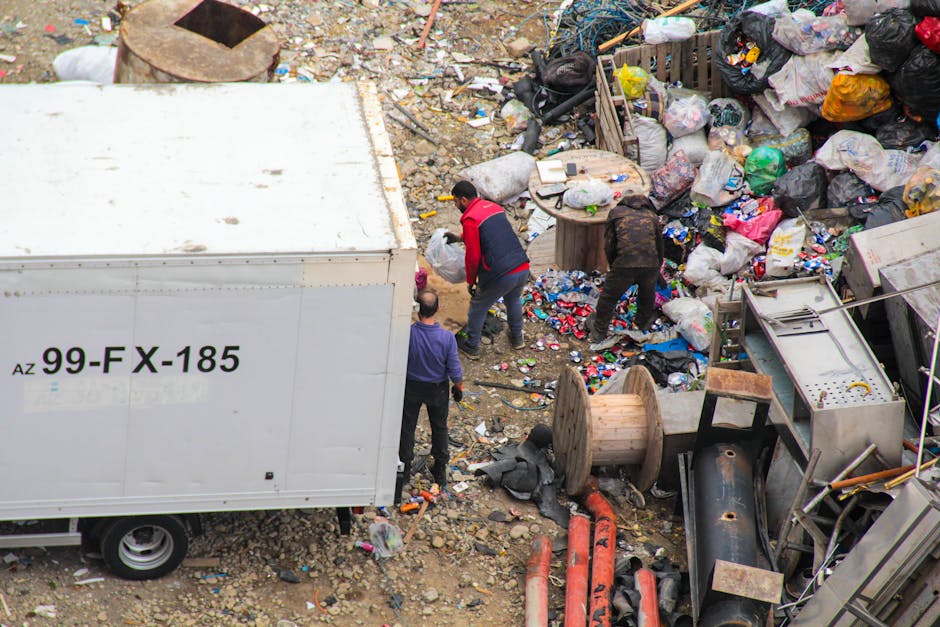
Rubbish collection options near Earls Court Station
If you are dealing with bulky bags, awkward furniture, builders' debris, or a pile of mixed rubbish that has somehow grown overnight, you are probably looking for the most sensible rubbish collection options near Earls Court Station. The good news is that there is more than one way to get waste removed quickly and properly, and the right choice usually depends on access, volume, timing, and whether you can wait for a container or need a fast clear-out. Around Earls Court, with its busy streets, tight parking, and a mix of flats, shops, offices, and renovation projects, the details matter a bit more than people first expect.
This guide breaks down the main collection methods, when each one makes sense, and how to avoid the common headaches that turn a simple waste job into a stressful day. You will also find practical tips, a comparison table, a checklist, and answers to the questions people ask most often.
Why Rubbish collection options near Earls Court Station Matters
Earls Court is one of those places where rubbish removal can seem straightforward until you actually try to do it. Then the little problems show up: no parking, awkward stairwells, controlled access, neighbours who are not thrilled about noise, and limited space to keep waste sitting around. To be fair, this is exactly why the right rubbish collection option matters so much. A method that works perfectly in a suburban driveway may be hopeless outside a mansion block or basement flat.
The other reason it matters is timing. Waste tends to build up at the worst possible moment. A flat clearance before a move, a burst of kitchen renovation, a shop refit, or a weekend garden job can leave you with a mixture of materials that cannot simply be left on the pavement. If you choose badly, you may end up paying more, waiting longer, or having to handle the same rubbish twice.
From a practical point of view, the best collection plan keeps the site tidy, reduces disruption, and helps ensure recyclable material is separated where possible. That is especially useful in dense parts of London, where people notice when a job is messy. And let's face it, nobody wants a pile of broken chairs and plasterboard sitting there all week, attracting complaints.
For many customers, the goal is not just "get rid of waste." It is "get rid of it quickly, safely, and without the rest of the day turning into a circus." Fair enough.
How Rubbish collection options near Earls Court Station Works
Most rubbish collection services follow a similar basic process, but the route you choose changes how hands-on the job is. Some services are ideal if you want a team to load everything for you. Others suit people who already have waste stacked neatly and just need it taken away. The best choice depends on how much rubbish you have, what it is made of, and how easy it is to reach the property.
In practice, the process usually begins with a description of the waste. A photo or a quick list helps a lot. Mixed household rubbish, old furniture, black bags, garden cuttings, and light refurbishment debris all need slightly different treatment. If the load includes items like appliances, confidential paperwork, or anything classed as hazardous, you will need to be more careful about the service you choose.
One common route is a booked rubbish removal visit, where operatives arrive, assess the load, and clear it there and then. Another is skip hire, where a container is delivered and collected later. A third option is a grab lorry or wait-and-load arrangement, which can be useful where road space is tight. If you need an immediate turnaround, same-day options may help, but availability can vary, especially during busy periods.
When comparing rubbish collection options near Earls Court Station, it helps to think in stages:
- Identify the waste type and rough volume.
- Check access, parking, and loading constraints.
- Decide whether you need labour to load the waste.
- Choose a collection method that fits the site and timing.
- Make sure reusable or recyclable items are separated where practical.
That sounds simple, and mostly it is. The trouble usually starts when people skip the access check. A service can be perfectly good and still be a poor fit for a building with no lift, a narrow doorway, or nowhere legal to leave a skip.
Key Benefits and Practical Advantages
The main benefit of using a professional rubbish collection service is speed. A messy room, yard, or worksite can be cleared in one visit instead of stretching into a week of borrowed vans, ignored black bags, and "I'll deal with that tomorrow." There is a quiet relief in seeing the space go from cluttered to usable again. You notice it straight away.
Another advantage is flexibility. Different collection methods suit different jobs, and that gives you room to be practical rather than forcing the waste into one solution. For example, rubbish removal is useful when you want a team to do the lifting, while skip hire can work well for longer jobs where waste will build up over several days. For a business with regular waste output, commercial skip hire may be more efficient than repeated ad hoc clearances.
There is also the matter of control. If you know what is going away, when it is going, and who is handling it, the job feels manageable. That sounds small, but it matters. Waste jobs often become stressful because they are interrupting another project: decorating, moving, building, or reopening a premises. The better the collection method, the less the interruption.
Other useful benefits include:
- Cleaner access around the property
- Reduced manual handling for you and your team
- Better sorting for recycling where appropriate
- Less chance of overfilling a car or van
- Lower risk of fly-tipping or leaving waste in the wrong place
Sometimes the real value is simply not having to think about it again. That is underrated, honestly.
Who This Is For and When It Makes Sense
Rubbish collection options near Earls Court Station are relevant to more people than you might think. It is not just builders with brick rubble or landlords after a tenancy ends. It can also be ideal for families, shopkeepers, offices, tradespeople, and anyone who has reached the point where the spare room is no longer a spare room.
Typical situations include:
- House clearances after a move or bereavement
- Flat refurbishments with mixed building waste
- Office clear-outs and confidential disposal
- Garden tidy-ups and seasonal waste removal
- Old mattresses, sofas, and broken appliances
- Builder's waste from kitchens, bathrooms, or extensions
If you are a homeowner with a few bulky items, a man and van style collection or a targeted disposal service may be enough. If you are managing a renovation, a skip might be more efficient. For construction projects, it is often worth looking at builders skip hire or construction waste disposal because those services are designed around heavier, more awkward material.
Business users have their own needs. Shops, clinics, offices, and hospitality premises often need waste removed without disrupting customers or staff. In those cases, the ability to clear fast, early, or outside peak hours becomes important. A short disruption in the morning is much easier to absorb than a whole day of clutter by the entrance. Nobody enjoys stepping over cardboard at opening time.
Truth be told, the "best" option is usually the one that matches your property, your schedule, and your patience level. A quick solution is not always the cheapest on paper, but it can be the most economical once you factor in time and effort.
Step-by-Step Guidance
Here is a practical way to choose the right rubbish collection method without overcomplicating it.
- List what needs removing. Separate general household rubbish, furniture, green waste, building materials, and any special items. If there is hazardous material, stop and check the correct route first.
- Estimate the volume. Is it a few bags, a roomful of clutter, or enough waste to fill a container? A rough estimate is usually enough to start.
- Review access. Can a vehicle stop nearby? Is there a lift? Are there stairs, tight turns, or parking restrictions? This can change the most suitable option completely.
- Choose the service style. If you want help loading, rubbish removal may fit best. If waste will accumulate over time, a skip could be better. If space is limited, wait and load skip hire may be the sensible middle ground.
- Check what can go together. Some loads can be mixed, others should be separated. It is worth reading guidance on what can go in a skip before you book anything.
- Book the collection. Give clear information about access, waste type, and timing. Small details save time on the day.
- Prepare the site. Move obstacles, keep pathways clear, and make sure the collection point is safe to reach. That little bit of prep makes a big difference.
If you are not sure which route to take, start with the question: do you need labour, storage, or speed? One of those usually leads the decision. Not always all three, and that is fine.
Expert Tips for Better Results
In our experience, the jobs that go smoothly are the ones where the waste is thought through before the truck arrives. Nothing fancy. Just a bit of common sense. Here are some useful habits that save time and money.
Sort before collection where possible. If cardboard, green waste, and general rubbish are separated in advance, the collection is easier to manage. It may also help recycling rates, which is always worth aiming for.
Take photos early. A quick photo of the waste and the access route is often enough to avoid awkward surprises. If there is a narrow entrance or basement access, mention it upfront. The driver will thank you, silently or otherwise.
Think about timing. If you are in a busy street near the station, morning or off-peak collections may be calmer. A few minutes of planning can reduce disruption to neighbours and pedestrians.
Use the right container size. Oversizing wastes money; undersizing creates repeat visits. A sensible match matters more than people think. If you want help comparing sizes and cost bands, skip sizes and prices is the kind of page that helps you narrow things down quickly.
Keep heavy items accessible. Broken wardrobes buried under lighter rubbish can slow everything down. Put the heavy or awkward pieces near the front if you can.
Plan for awkward items early. A fridge, sofa, or mattress often needs a specific disposal route. Sorting that in advance saves last-minute phone calls and makes the collection less chaotic.
Expert summary: the best rubbish collection choice is usually the one that fits the site first and the waste second. If access is poor, method beats volume every time.
Common Mistakes to Avoid
People usually make the same few mistakes, and they are easy enough to avoid once you know them.
- Guessing the waste volume. A vague "not that much" can lead to the wrong vehicle or container.
- Ignoring access issues. Tight streets, gates, and stairwells can affect both timing and cost.
- Mixing prohibited items with general waste. Some materials need specialist handling, especially anything hazardous.
- Leaving it too late. If the rubbish is building up during a project, book before it starts to become unmanageable.
- Forgetting about permissions. If a skip needs to go on the public highway, permits may be required. That is one of those details people remember at the worst possible moment.
- Assuming every service is the same. It is not. A service suited to domestic rubbish may be a poor fit for construction or office waste.
A smaller mistake, but still a frustrating one, is not telling the provider about lifts, no-parking zones, or restricted loading windows. The job may still get done, but nobody enjoys avoidable delays.
Tools, Resources and Recommendations
You do not need specialist equipment to make rubbish collection easier, but a few simple tools can help the process feel less like a scramble. Sturdy gloves, a marker pen for labelling bags, tape for boxes, and a trolley or sack truck for heavier items can save your back and a fair bit of time. If you are clearing an office, secure shredding boxes are useful for paperwork that should not be mixed with general waste. For that type of job, confidential shredding is worth considering.
For larger or more awkward loads, the right service often matters more than the right tool. A grab hire service can be useful when waste is piled up and there is room for a machine to reach it. If the site is congested or time is limited, a same-day skip hire option may solve a deadline problem without dragging the job out.
Specialist services can also be a better fit for certain materials. fridge and appliance removal helps with bulky white goods, while mattress and sofa disposal is useful when furniture is the main problem. For larger property clearances, house clearance or garage and loft clearance may be the more practical route.
And if you are weighing up service quality as well as price, it is sensible to look at a provider's approach to recycling, safety, and customer service. A company's recycling and sustainability information can tell you a lot about how seriously it treats waste handling. So can its health and safety policy and insurance and safety details. Not glamorous, perhaps. But useful.
Law, Compliance, Standards and Best Practice
Waste collection in the UK is not just about convenience. There are legal and practical duties around correct disposal, duty of care, and keeping hazardous items out of general waste streams. You do not need to become a compliance expert, but you should use a provider that understands the basics and handles waste in a responsible way.
For everyday domestic and commercial rubbish, the main best-practice principles are fairly straightforward: waste should be collected safely, transported properly, and directed to legitimate treatment or disposal routes. If you produce waste as part of a business or trade, you should take extra care with records, segregation, and the type of contractor you use. That is especially true for builders, facilities teams, and anyone managing mixed waste streams.
If your waste includes items that may be hazardous, such as chemicals, certain electricals, or contaminated materials, it is wise to get specific advice before booking. That is where specialist services like hazardous waste disposal become important. Cutting corners here is not worth it. Seriously, not worth it.
Permits can also matter. If a skip is being placed on a public road rather than on private land, permission may be needed, and timing can become part of the planning. Some projects are better served by a permit-supported skip, while others fit better with skip permits guidance or with a collection method that avoids leaving a container on-street for long periods. If road space is tight, a wait and load skip hire arrangement may be a cleaner solution.
Best practice is simple: describe the waste accurately, separate problem materials, and choose a provider that can explain how the collection will be handled. If the answer feels vague, keep asking. A reliable service should be comfortable with clear, plain-English answers.
Options, Methods, and Comparison Table
If you are deciding between collection methods near Earls Court Station, this simple comparison can help you narrow things down.
| Option | Best for | Main advantage | Possible drawback |
|---|---|---|---|
| Rubbish removal | Small to medium mixed loads, furniture, household clutter | Teams do the lifting and loading | May be less suitable for long projects with ongoing waste |
| Skip hire | Renovations, builders' waste, longer clear-outs | Waste can be added over time | Needs space and may need a permit |
| Wait and load | Tight streets, limited parking, quick clearances | No need to leave a container on site | Waste must be ready quickly |
| Grab lorry hire | Loose, bulky, or piled waste on accessible sites | Fast removal of larger volumes | Not ideal where access is restricted |
| Man and van | General household clearances, one-off bulky loads | Flexible and straightforward | Can be less efficient for heavy building debris |
A good rule of thumb: if the waste is already piled up and the site is accessible, grab or removal can be very efficient. If the waste will accumulate over days, a skip may be better. If the site is cramped, wait-and-load often deserves a closer look. There is no single winner. Annoying, perhaps, but true.
Case Study or Real-World Example
Imagine a small flat refurbishment a few minutes from Earls Court Station. The owner is replacing a kitchen, clearing a hallway cupboard, and getting rid of an old sofa, a broken appliance, and several bags of mixed waste. The building has narrow stairs, limited street space, and no easy place to keep a skip for long. A traditional drop-off container would be awkward, and a purely DIY solution would mean repeated trips with a car or van. Not ideal in London traffic, as you can guess.
In that situation, a practical choice might be a booked rubbish removal service for the bulky items, combined with a short-notice collection for the lighter mixed waste. If the project stretches over several days, the team might switch to a small skip or a wait-and-load arrangement once the largest items are out of the way. That gives the customer flexibility without cluttering the entrance for everyone else in the building.
The key lesson is not the exact service used. It is the thinking behind it. The successful jobs are usually the ones where access, timing, and waste type are matched properly from the start. The messy jobs are the ones where someone says, "It'll be fine," and then the waste pile doubles before lunch.
Practical Checklist
Use this quick checklist before booking rubbish collection near Earls Court Station:
- Have I listed all the waste items that need removing?
- Do I know whether any items are hazardous or need special handling?
- Have I estimated the volume accurately enough?
- Is access simple, or should I mention stairs, gates, or narrow roads?
- Do I need labour to load the waste, or just a container?
- Would a skip, wait-and-load, grab hire, or removal team be the better fit?
- Do I need to check permit requirements?
- Have I separated recyclable items where practical?
- Have I chosen a time that will cause the least disruption?
- Do I understand the provider's booking, payment, and collection terms?
If you can tick most of those off, you are already ahead of the game. Small prep, big difference.
Get a free quote today and see how much you can save.
Conclusion
There is no single "best" rubbish collection option near Earls Court Station. There is only the best option for your access, your waste type, your timing, and your budget. For some people that means rubbish removal with labour included. For others it means a skip, a grab lorry, or a wait-and-load service that avoids leaving anything on the street for long. The smart move is to treat the waste job like a practical logistics problem, not a last-minute annoyance.
If you plan ahead, describe the load clearly, and choose a service that fits the site, the whole process becomes far less stressful. And that is the real win here. Less mess, less fuss, more done. Simple as that.
When the clutter is finally gone and the space feels open again, you tend to breathe a little easier. That part never really gets old.
Frequently Asked Questions
What are the main rubbish collection options near Earls Court Station?
The main options are rubbish removal, skip hire, wait-and-load, grab hire, and man-and-van collections. The best one depends on how much waste you have, how easy it is to access, and whether you need help loading.
Is rubbish removal better than skip hire for flats near Earls Court Station?
Often, yes, if access is tight or you do not have space for a skip. Rubbish removal can be easier for flats because the team loads the waste for you. Skip hire can still work well if the building has suitable access and you need ongoing use over several days.
Can I get same-day rubbish collection near Earls Court Station?
Sometimes you can, depending on availability and the type of waste. Same-day options are useful for urgent clearances, but it is best to book as early as possible because busy London schedules can fill quickly.
Do I need a permit for a skip near Earls Court Station?
If the skip needs to go on public highway space, a permit may be required. If it stays entirely on private land, a permit is usually not needed. It is worth checking before booking so there are no last-minute delays.
What happens if I have mixed waste from a renovation?
Mixed waste can usually be handled, but some materials should be separated first, and certain items may need specialist disposal. If the load includes rubble, timber, plasterboard, metal, or appliances, describe it clearly when booking.
Can bulky furniture be collected from a flat?
Yes, bulky items such as sofas, wardrobes, and mattresses are commonly collected from flats. The main thing is access: stairs, narrow halls, lifts, and parking can all affect the best service choice.
Is grab hire useful in central London areas like Earls Court?
Grab hire can be very useful where waste is piled up and there is enough access for the vehicle. It is often a good choice for larger loads, but it is not ideal if the street layout or access is too restricted.
How do I choose the right collection option for my waste?
Start with three questions: how much waste do I have, how easy is access, and do I need help loading? Those answers usually point you toward the right choice quickly.
What items usually need special disposal?
Hazardous waste, some electrical items, fridges, mattresses, sofas, confidential paperwork, and certain building materials may need specific handling. If in doubt, ask before booking rather than guessing.
How can I keep rubbish collection costs under control?
Be accurate about the amount of waste, sort items in advance, and choose the right service for the site. The biggest cost surprises usually come from underestimating volume or choosing a method that does not fit the access.
What is the most convenient option for a busy commercial property?
For many businesses, a planned collection that minimises disruption is best. That might be commercial skip hire, same-day clearance, or a service arranged outside opening hours, depending on the site and the type of waste.
Are recycling and sustainability worth checking before booking?
Yes. A responsible provider should be clear about recycling and waste handling. It is not just a nice extra; it is a good sign that the service takes disposal properly and does not treat everything as one big mixed pile.
If you are still unsure, that is completely normal. The right rubbish collection choice is often clearer once you look at the site and the waste together, not in isolation. A quick conversation and a few photos can save a lot of guesswork, which is usually the real problem anyway.